With the full-fledged summer mountain climbing season approaching, anxiety is spreading in towns at the foot of Mt. Fuji. The cause is a series of bear sightings. What is this unusual situation that locals say “has never happened before”? (Aired on Saturday Station on May 30th)
■ Mountain opening ceremonies held in various locations Report from people with “unusual equipment” – Director Kanako Sasahara “At this mountain, which opened for the season today, a safety prayer ceremony is currently being held.” The “Kujihiradake Mountain Opening Ceremony,” a traditional early summer event, was held at a shrine in Hirono Town, Iwate Prefecture. There have been no recent bear sightings on this climbing trail, but climbers are equipped with different gear than usual. Climber “I brought a bear bell, a water bottle, bear repellent spray, and a sickle.”
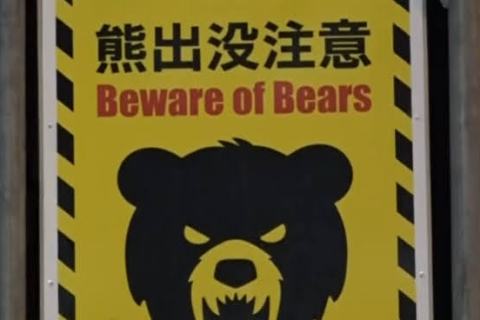
■ “Unprecedented” bear sightings continue at the foot of Mt. Fuji Bear sightings continue this week as well. In Susono City, Shizuoka Prefecture, located at the foot of Mt. Fuji, bears have been sighted for seven consecutive days since last week, and sightings have been frequent. There were zero sightings at the same time last year. This year, there have already been nearly 20 sightings.
■What is the “Fuji Regional Population,” estimated to number around 100? Susono City Mayor Yu Murata: “Something unprecedented is happening.” Susono City says this is an unprecedented situation. The bears in this region are actually called the “Fuji Regional Population” because they inhabit the area around Mt. Fuji. Professor Shinsuke Koike of Tokyo University of Agriculture and Technology Graduate School: “The group of Asiatic black bears that live east of the Fuji River (which flows through Shizuoka Prefecture) is called the Fuji Regional Population. The bear sighted in Susono City this time is thought to be an individual that came out of the Fuji Regional Population.” For a long time, they have been thought to have formed their own community, and because their habitat is shrinking due to being separated from other areas by rivers and roads, they are listed as an “endangered regional population” in Shizuoka Prefecture’s Red Data Book.
■Why are bears, which were rarely seen, appearing now? Local authorities are increasing vigilance. But why are sightings increasing? A population survey conducted by the prefecture two years ago confirmed a population of approximately 100. Professor Shinsuke Koike of Tokyo University of Agriculture and Technology Graduate School: “The current situation is that we don’t even know whether the bear population in the Fuji region is clearly increasing or if it is stable.” Yoshinobu Togawa of the Susono City Hunting Association: “We really only see them about once a year. There are even years when we don’t see them at all.” Even hunters rarely see bears at the foot of Mt. Fuji. Yoshinobu Togawa of the Susono City Hunting Association: “It crossed this road. Around here.” The hunting association is also taking precautions by setting up box traps and strengthening patrols.
■Independent investigation The sensor camera captured a situation where residents are still living in tension. Resident whose house was hit by a bear: “I took the picture from here. It was around that area.” A bear appeared behind the house last Sunday, and the incident was filmed. Will it appear again? With the cooperation of the residents, we were allowed to set up a sensor camera for the program. After a night’s sleep, we looked at the footage. Report by Director Hayate Koyama: “We can see animals on the footage. We can see at least five at this point.” The footage showed a herd of deer. The area behind the house is a path used by mountain animals.
■ Consideration of introducing a “special bear warning” The impact will be that the alert phase will be further strengthened. Governor Yoshimura of Yamagata Prefecture mentioned the establishment of a “special bear warning” at a regular press conference. If issued, it is expected that people will be asked to refrain from gathering wild vegetables. He says that “this will not be forced on people who make a living from gathering wild vegetables,” but how do those involved feel about it? Nomikuidokoro Sachio Hiromi Kobayashi: “These are pickled and blanched bracken.” Bracken is in season now. Dishes like these are said to be popular. Nomikuidokoro Sachio Hiromi Kobayashi: “If there wasn’t someone to gather them for us, we wouldn’t be able to eat them.” These wild vegetables are gathered in the mountains by the owner’s father. We were allowed to interview them about the current state of the harvest. Hiroyuki Kikuchi, who runs a bracken farm, says, “They’re usually about 30 centimeters long. Bears tend to come out, so I’m careful around the bushes.” He says he’s now planting wild vegetables in his fields so he doesn’t have to go into the mountains as often. Hiroyuki Kikuchi, who runs a bracken farm, says, “You can’t get the good ones unless you go deep into the mountains, but ultimately, life is the most important thing.” [TV Asahi NEWS]